
Considering the blood compatibility materials for medical devices (Part 1 of 3)
Part 1 | Study of Anticoaglation polymers
From questions about heparinto the "intermediate water" theory
A common challenge for medical devices that come into contact with blood is "interaction with blood." In the 1990s, heparin coating was considered the standard method for preventing blood clots, but in the 2000s, the BSE (bovine spongiform encephalopathy) problem made the need for synthetic polymers an urgent necessity. Professor Ken Tanaka of Kyushu University, while working as a corporate researcher developing blood-compatible materials, discovered the superiority of PMEA (poly(2-methoxyethyl acrylate)), which overturned conventional wisdom found in textbooks.
The "unexplainable discrepancy" revealed by protein denaturation and platelet adhesion data—the journey to find the answer led to the intermediate water concept. This book delves into the origins of blood compatibility research, a must-read for all engineers involved in the design of medical device materials.
profile

Professor Ken Tanaka
Kyushu University, Institute for Materials Chemistry and Engineering, Department of Applied Chemistry
A researcher in the field of medical polymers and soft biomaterials. He has spearheaded research on PMEAand the intermediate water concept, making significant contributions to the material design of medical devices that come into contact with blood.
After gaining experience in research and development at a medical device manufacturer, he is now a professor in the Department of Interdisciplinary Soft Materials Chemistry at the Institute for Materials Chemistry and Engineering, Kyushu University, where he is engaged in research and education that leverages his experience in both industry and academia.

Ayako Kiyatake(Interviewer)
Mitsubishi Chemical CorporationCPDTechnology(Japan)Center
At Mitsubishi Chemical, I was involved in the development of medical materials, focusing on blood contact materials and biocompatibility, andengaged in the development of novel antithrombotic elastomers.
Why does blood clot occur on medical devices?
Kiyatake: Professor, you have been engaged in research on medical polymers and soft biomaterials for a long time. What was the starting point for that research?
Professor Tanaka: The first keyword is heparin. Heparin is a type of sulfated polysaccharide produced by living organisms, and its anticoagulant activity was already known physiologically, so in the medical field, there was the idea that "if heparin is covalently bonded to the surface of various medical devices, blood clots can be prevented." Until the late 1990s, that was one of the standard approaches.
Kiyatake : I heard that changed because of the BSE problem?
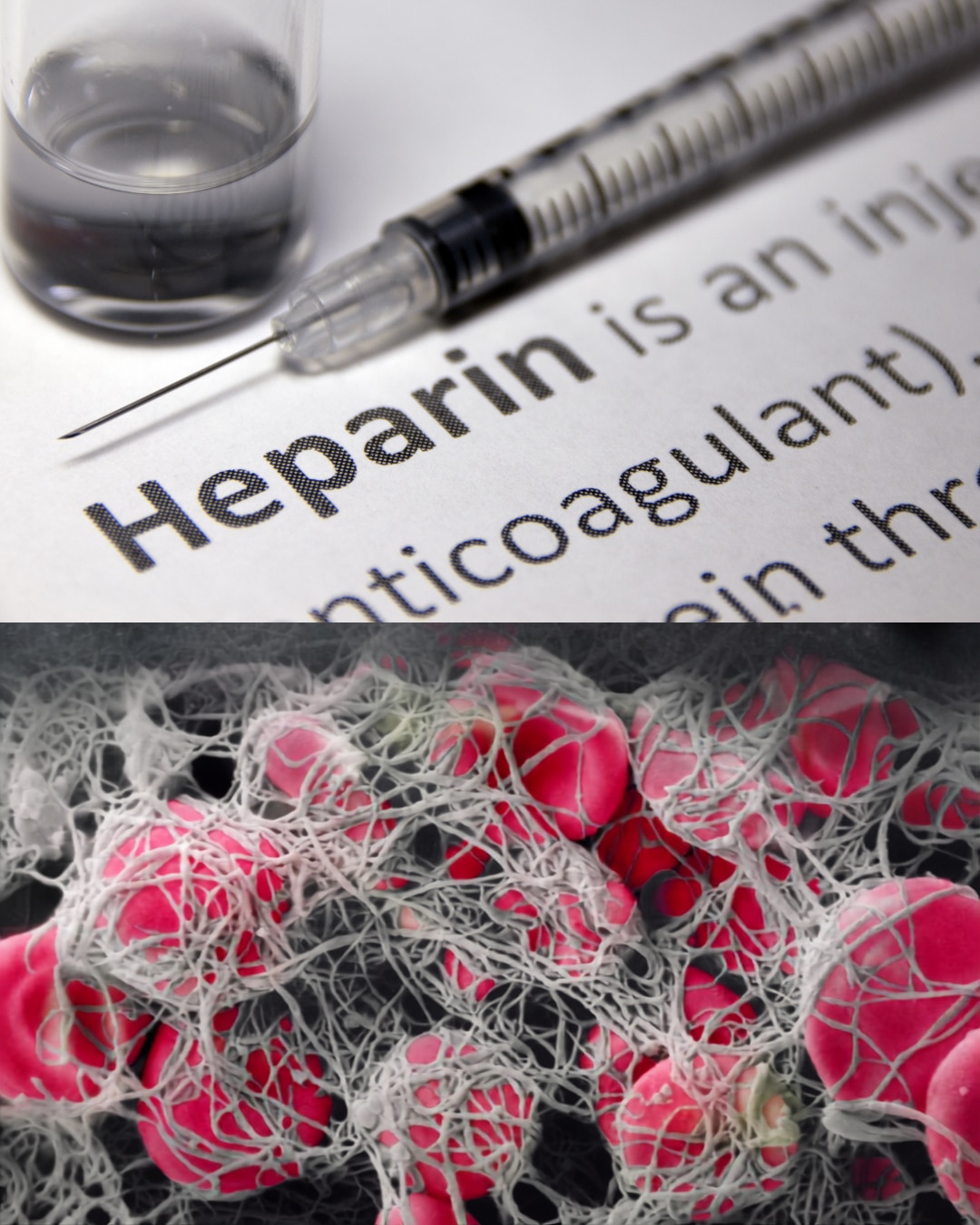
Professor Tanaka: That's right. The BSE problem suddenly came to the surface in the late 1990s and early 2000s. The risks of using biomolecules derived from animals such as cattle and pigs in medical devices were questioned, and the Ministry of Health, Labour and Welfare's policy changed. However, patients were waiting, so we couldn't stop. So, our team started working towards the idea of using synthetic polymers to replace the function of heparin, under the keyword "artificial heparin." It wasn't just me; we were a team working on it.
Kiyatake: Heparin is a biomolecular (high) molecule, so I think reproducing it with synthetic polymers was quite a challenging task.
Professor Tanaka: Looking back now, it was quite challenging (laughs). But at the time, I had a hypothesis that the explanation in the textbook—"This is the mechanism by which heparin has anticoagulant activity"—might not be the whole story. If there was another mechanism, I wondered if it could be created with synthetic polymers. You could say I was being contrarian, but my desire to do something new took precedence.
PMEA Emerges as the Top Performer in Blood Compatibility.
Kiyatake: What did you start with to verify that hypothesis?
Professor Tanaka: First, I focused on PHEMA (poly(2-hydroxyethyl methacrylate)), which was frequently mentioned in research papers at the time. It is a hydrophilic hydrogel that is also used as an ingredient in soft contact lenses, and it was known to have "reasonably good blood compatibility."
I wondered how it would compare to heparin. So, I prepared five samples every day, synthesized them, purified them... and repeated this painstaking process of organic and polymer synthesis. It was a truly gritty experiment.
Kiyatake: So, what did you learn from that?
Professor Tanaka: What surprised me was the data regarding blood compatibility.
Textbooks and research papers state that "hydrophilic polymer materials have better blood compatibility."
However, in the data I obtained, PHEMAmore hydrophobicPMEAThat was clearly better. That's right.
"This trend seems to contradict conventional wisdom," I thought. Platelet adhesion counts were low, and complement activation was suppressed. However, the reason for this was unknown.
Kiyatake: What if we investigate at the protein level?
Professor Tanaka: When we examine the amount of protein adsorbed and the degree of denaturation of the adsorbed protein,
The results showed that PMEA was less prone to denaturation than PHEMA. The correlation between the degree of denaturation of adsorbed proteins and blood compatibility was already known from published papers, so I was confident that my data was correct.
However, I couldn't find any papers that explained "why proteins are resistant to denaturation." Almost all protein adsorption research at the time was "phenomenological," and while there were descriptions of "the amount of adsorption was this much" and "the degree of denaturation was this much," the reasons were only explained by surface free energy or hydrophilicity/hydrophobicity. At least, it didn't explain my data.
"Water might be important"—A single paper that became a turning point.
Kiytake: That's when I started to focus on "water."
Professor Tanaka: It all started with a paper published in 1998.
Co-authored by Professor Kazuhiko Ishihara and Professor Nobuo Nakabayashi, et al. (Reference 1)
The paper was titled "Why do phospholipid polymers reduce protein adsorption?"
The title includes the question "Why".
"What is this! This is exactly the question I've been wondering about," I thought.
When I read it, it said, "Water is important." The idea that water is important was commonplace back then, because water is always present on the surface of any material (laughs).
Kiyatake: But something changed from that point on.
Professor Tanaka: The paper included DSC (Differential Scanning Calorimetry) data, and the concept of "free water" was proposed. There was an old DSC machine in the company, so I started measuring by trial and error. It didn't go well at all (laughs). I kept failing at sealing the aluminum pans. But as I kept at it, I gradually got the hang of it.
When we measured hydrated PMEA, we detected a peak that was remarkably similar to that of hydrated PEG (polyethylene glycol). This "cold crystallization"—a peak originating from intermediate water in modern terminology—was consistently detected with high reproducibility in every measurement.
Kiyatake: When did you feel that the peak of your peak had meaning?
Professor Tanaka: At first, I was skeptical. 50% of me thought it might just be a coincidence. But 50% of me also thought it might be true. I think the reason I was able to continue without giving up was because of that "maybe" feeling. I'll explain the definition of the technical term "intermediate water" and its detailed meaning in more detail next time.
Next episode preview
A unique DSC peak repeatedly appeared in PMEA, but was hardly observed in other synthetic polymers. On the other hand, a large amount of intermediate water was commonly observed in PMEA, MPC (phospholipid) polymers, and biomacromolecules—what does this difference mean?
In the second installment, we will delve into the question of "What is intermediate water?" through experimental data and material comparisons.
References
- Ishihara, K., Nomura, H., Mihara, T., Kurita, K., Iwasaki, Y. and Nakabayashi, N. (1998), Why do phospholipid polymers reduce protein adsorption? J. Biomed. Mater. Res., 39: 323-330.
Technical Terminology Explanation
BSE problem
The BSE problem of the 1990s led to the establishment of strict controls on the country of origin, organization, rearing/slaughtering, manufacturing process, and lot tracking for medical devices and pharmaceuticals using bovine-derived materials. Unlike synthetic polymers, in addition to chemical quality, biological risks such as viruses, bacteria, and TSE/BSE must be evaluated throughout the entire supply chain. Heparin is mainly derived from pig intestinal mucosa, but for medical devices, authenticity of animal species, impurity testing such as OSCS, supplier audits, and acceptance/change control are required. If bovine-derived components are involved, TSE/BSE risks must be evaluated separately.
Blood compatibility (Blood compatibility)
Material properties that suppress thrombus formation, inflammation, and hemolysis when in contact with blood. ISO 10993-4 Based on this, evaluation is performed using platelet adhesion, coagulation markers, complement activation, and hemolysis.
Heparin
Sulfated polysaccharides extracted from the organs (mainly intestinal mucosa) of cattle and pigs. They possess strong anticoagulant activity and have been widely used as coating materials for medical device surfaces. Following the BSE (bovine spongiform encephalopathy) issue, concerns about animal-derived risks have increased. In Japan, replacement with alternative materials and synthetic polymer materials has progressed.
PMEA(Poly(2-methoxyethyl acrylate))
2-An acrylic polymer obtained by polymerizing methoxyethyl acrylate. It exhibits low platelet adhesion and protein denaturation, and excellent blood compatibility. ECMO It is used as a material for blood-contact medical devices such as dialysis machines, catheters, and stents.
PolyHEMA(Poly(2-hydroxyethyl methacrylate))
A hydrophilic polymer used in soft contact lenses. While it has a high water content, it is cited as a prime example where high hydrophilicity does not necessarily equate to high blood compatibility.
Proteindenaturation
Denaturation occurs when proteins change their three-dimensional structure and lose their original function after adsorbing onto a material surface. Denatured proteins are recognized as a "danger signal" by platelets and the immune system, triggering thrombus formation and inflammation.
DSC(Differential Scanning Calorimetry)
This technique measures the heat transfer difference between a sample and a reference material to analyze processes such as melting, crystallization, and glass transition. By measuring a system of material mixed with water, the presence of free water, nonfreezing water, and intermediate water can be indirectly evaluated.