
Why do plasticizers migrate in food contact PVC? An explanation of the characteristics and migration mechanisms of DEHP, ATBC, and TOTM.
PVC (polyvinyl chloride) allows flexibility and processability to be easily tailored and is used in food-grade hoses, tubes, gaskets, and other applications. However, the plasticizers used in flexible PVC affect not only material performance but also migration into food and regulatory compliance.
This article explains the characteristics and migration mechanisms of representative PVC plasticizers such as DEHP, ATBC, and TOTM. It also outlines key considerations for selecting food contact materials, including DEHP-free PVC and plasticizer-free TPE, in terms of flexibility, heat resistance, processability, migration characteristics, and regulatory compliance.
Key points of this article
- PVC plasticizers include DEHP, ATBC, and TOTM, which differ in flexibility, heat resistance, migration characteristics, and regulatory compliance.
- Since plasticizers are not chemically bound to PVC, they may migrate into food depending on factors such as the type of food, temperature, and contact time.
- For food contact applications, it is important to select materials based on the intended application and performance requirements, considering not only the type of plasticizer but also alternatives such as DEHP-free PVC and TPE.
Table of Contents [hide]
- 1.Why plasticizers are needed in PVC
- 2.Selection points for PVC plasticizers for food contact applications
- 2.1.Flexibility
- 2.2.Heatresistance
- 2.3.Difficulty of migration
- 2.4.Interaction with PVC
- 2.5.Long-term stability
- 2.6.Regulatory Compliance
- 3.Characteristics of typical plasticizers
- 3.1.DEHP (Di(2-ethylhexyl) phthalate)
- 3.2.ATBC (Acetyl Tributyl Citrate)
- 3.3.TOTM (Trioctyl Trimellitate)
- 3.4.What to prioritize
- 4.Plasticizer migration mechanism
- 4.1.The effect of molecular weight and interaction with PVC on migration
- 4.2.Effects of food and usage conditions
- 4.3Key Concepts in Transition Evaluation
- 5.Considerations for material selection in food contact applications
- 5.1.DEHP-free PVC
- 5.2.TPE
- 6.Summary
- 7.Frequently Asked Questions (FAQ)
- 8.Points to note when implementing
- 9.ReferenceURL
Why plasticizers are needed in PVC
PVC (polyvinyl chloride) can be broadly divided into rigid PVC and flexible PVC.
Rigid PVC is relatively rigid and is used for piping materials and sheets, while flexible PVC is used for applications where flexibility is required, such as hoses and tubes.
In flexible PVC, flexibility is imparted by blending plasticizers into the PVC. The plasticizers enter between the PVC chains, easing the interactions between molecular chains and lowering the glass transition temperature (Tg) of the PVC. As a result, rigid PVC becomes softer and more pliable, allowing it to be processed into flexible PVC.
Plasticizers are not simply components that soften PVC. Depending on the type and amount added, they affect processability during mixing and extrusion, hardness after molding, bleeding, odor, and changes in physical properties during long-term use. Therefore, for food contact applications, it is necessary to consider not only the required flexibility but also which plasticizer to use and in what formulation.
関連: 食品接触用PVCの規制対応、移行評価、用途別の選定ポイントは、「食品接触材料におけるPVCの評価・選定ポイント|規制対応・可塑剤・移行評価を解説」で詳しく解説しています。
Key points for selecting PVC plasticizers for food contact applications
When selecting a plasticizer, it is necessary to consider not only the hardness and flexibility of the final product, but also processability, physical stability after molding, bleed and odor, and migration characteristics to food. In particular, for food contact applications, the following items should be evaluated comprehensively.
Flexibility
Flexibility is the most fundamental role of plasticizers. In hoses and tubes, it's crucial to achieve the necessary hardness and flexibility, as this affects ease of handling and resistance to bending. Furthermore, the degree of flexibility achieved varies depending on the type and amount of plasticizer added.
Heat resistance
For food contact applications, processes such as high-temperature filling, hot water washing, and CIP washing may be performed. If the heat resistance is insufficient, changes in physical properties are more likely to occur during use, so it is necessary to select a plasticizer that is suitable for the operating temperature conditions.
Difficulty of transition
Plasticizers may migrate to food depending on the type of food, temperature, and contact time. Migration assessment becomes particularly important when in contact with oily foods, in high-temperature environments, or during prolonged contact. When prioritizing low migration, the molecular weight and chemical structure of the plasticizer, its interaction with PVC, and the amount added should be examined.
Interaction with PVC
The interaction with PVC relates to the retention and migration behavior of plasticizers. Poor retention in PVC can lead to bleeding, precipitation, whitening, and changes in hardness. It is important to evaluate not only the type of plasticizer but also the entire formulation, including stabilizers and other additives.
long term stability
For food-grade hoses and gaskets, changes in hardness, volatilization, bleeding, odor, and migration due to long-term use and repeated washing must be considered. Not only initial physical properties, but also time-series evaluations under actual usage conditions are required.
Regulatory compliance
For food contact applications, regulatory compliance is just as important as performance. Requirements vary depending on the target market, including Japan's positive list system, EU regulations, and FDA regulations. Since the components and restrictions to be checked differ for each target market, compliance checks that take the market and application into account are essential when selecting plasticizers.
Related: A comparison of regulations in various countries and further details are explained in "Trends in PVC (Polyvinyl Chloride) and Alternative Resins for Food Contact Applications."
Characteristics of typical plasticizers
There are various types of plasticizers, including phthalates, citric acids, and trimellitic acids, and they are used differently depending on the application and required performance. Representative plasticizers include DEHP, ATBC, and TOTM. Each differs in plasticization efficiency, flexibility, heat resistance, migration characteristics, and processability, and some are more suitable than others depending on the application.
DEHP (Di(2-ethylhexyl) phthalate)
DEHP is one of the representative phthalate-based plasticizers. Due to its excellent plasticization efficiency and the ease with which it can impart flexibility to PVC with relatively small amounts, it has been used in a wide range of applications for many years.
On the other hand, DEHP may be subject to regulations in applications such as food contact and toys, and its use may be restricted depending on the application. For this reason, in recent years, there has been an increase in cases where designs using alternative plasticizers such as ATBC and TOTM are being considered.
ATBC (Acetyl Tributyl Citrate)
ATBC is a citric acid-based, non-phthalate plasticizer. It is often considered for food contact applications and is also a viable option for applications requiring transparency and low odor.
On the other hand, even when using ATBC, migration or bleeding may occur depending on the usage conditions, so evaluation is necessary taking into account the target food, usage temperature, and product lifespan.
TOTM (Trioctyl Trimellitate)
TOTM is a high molecular weight plasticizer classified as a trimellitic acid-based plasticizer. It is generally considered for applications requiring low migration and heat resistance. It can be a promising option in designs intended for high-temperature environments or long-term use.
On the other hand, due to its high molecular weight, the plasticization efficiency and processing conditions may differ from those of DEHP. Selection must be made considering the balance of required flexibility, moldability, heat resistance, and migration characteristics.
What to prioritize
The important thing is not which plasticizer is absolutely superior, but what to prioritize for each application.
The most suitable plasticizer varies depending on factors such as flexibility, heat resistance, migration resistance, and regulatory compliance. Furthermore, even if changing the plasticizer improves one issue, it may alter the balance with other properties. For food contact applications, it is crucial to evaluate not only the type of plasticizer but also the formulation design and usage conditions.
Table 1. Characteristics of typical PVC plasticizers
Evaluation items | DEHP | ATBC | TOTM |
Plasticization efficiency | expensive | Slightly expensive | moderate |
flexibility | expensive | Slightly expensive | moderate |
Heat resistance | moderate | moderate | expensive |
Low migration | Very low | Depends on the formulation and conditions | expensive |
long term stability | Depends on the formulation and conditions | Depends on the formulation and conditions | expensive |
Processability | expensive | Slightly expensive | moderate |
Study for food contact applications | Restrictions apply depending on the intended use and regulations. | expensive | Slightly expensive |
*This is a comparison showing general relative trends and does not guarantee suitability for food contact applications or the performance of specific products. Actual performance and migration amounts will vary depending on the formulation, additive amount, molding conditions, type of food, contact temperature, contact time, product shape, etc.
Plasticizer migration mechanism
Because plasticizers are not chemically fixed to the PVC chains, they may migrate from within the material and into food or the surrounding environment depending on the usage conditions. Migration proceeds through processes such as diffusion within the material, migration to the material surface, and distribution to the food. [1]
On surfaces that come into contact with food, the concentration of plasticizer decreases as it migrates to the food. Then, to compensate for this concentration difference, plasticizer from within the material moves to the surface and further migrates to the food. Through repeated diffusion and migration, the plasticizer gradually migrates to the food.
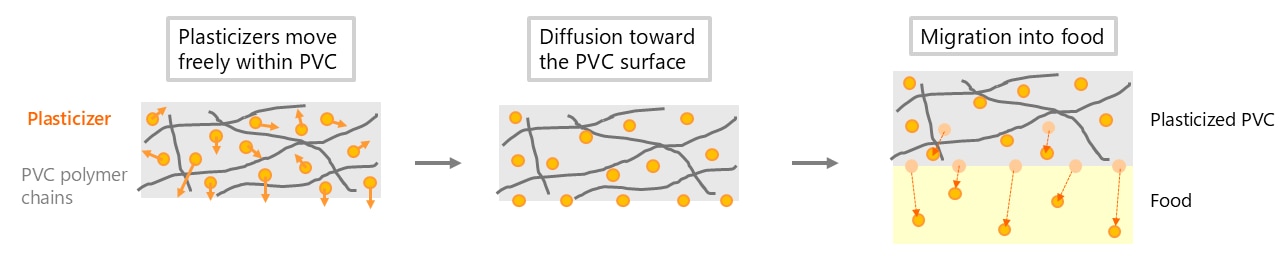
Figure 1. Plasticizer migration mechanism
The effect of molecular weight and PVC interaction on migration
The ease of migration is mainly influenced by the molecular weight of the plasticizer and its interaction with PVC. Generally, plasticizers with smaller molecular weights tend to move more easily within the material and migrate more readily. On the other hand, plasticizers with larger molecular weights have lower mobility and tend to remain in the material more easily. Polymer-based plasticizers have been reported to exhibit low migration properties. [1]
Furthermore, the polarity and chemical structure of the plasticizer also affect the migration behavior. Differences in the molecular structure of the plasticizer change the amount of migration, and differences in interaction with PVC are thought to be one of the contributing factors. [1]
Generally, plasticizers that have weak interactions with PVC are not easily retained in the material, and migration from the interior to the surface is more likely to occur. As a result, the amount transferred to food may increase, or precipitation (bleeding) to the surface may occur.
Effects of food and usage conditions
The type of food and usage conditions also significantly affect migration behavior. Fatty foods, in particular, have a relatively high affinity for plasticizers, and plasticizers tend to dissolve easily into the food. When the concentration of plasticizers on the food surface decreases, diffusion from the inside of the material to the surface continues to fill the concentration difference, making migration more likely to occur.
In actual studies using PVC film, almost no plasticizer migration was observed in acidic food simulation liquids, while in fatty food simulation liquids, plasticizer loss rates reached 75-90% in some cases, indicating that migration behavior differs greatly depending on the type of food. [1]
Furthermore, high-temperature environments increase molecular motion and the diffusion rate of plasticizers, making migration more likely. In addition, the longer the contact time, the more likely migration is to occur. In fact, studies on PVC gaskets for glass bottles have reported that much of the migration occurs during long-term storage, and the storage period greatly affects the amount of migration. [2]
Therefore, for food contact applications, not only the oil content but also the usage temperature and contact time are important evaluation conditions.
Key concepts in transition evaluation
In other words, the transition is not caused by a "bad plasticizer," but rather it is a phenomenon whose likelihood of occurring varies depending on the type of plasticizer, material design, the food it comes into contact with, and the usage conditions.
Furthermore, while the amount of migration varies depending on the type of plasticizer, the migration phenomenon itself does not completely disappear. Migration to oily foods has also been reported with plasticizers containing ATBC, so it is important to evaluate them according to the individual materials and conditions. [2]
Therefore, for food contact applications, it is important to conduct migration evaluations that take into account not only the type of plasticizer, but also the food it comes into contact with, the temperature at which it is used, and the contact time. Depending on the application, it may be necessary to review the material composition itself, including materials that do not use plasticizers, rather than just changing the plasticizer.
Guidelines for material selection in food contact applications
For flexible materials used in food contact applications, there are several options, including DEHP-free PVC, TPE, silicone, and TPU. This article focuses on the selection and migration mechanisms of plasticizers in flexible PVC, and examines DEHP-free PVC and TPE as specific material candidates.
DEHP-free PVC
DEHP-free PVC is a PVC compound that does not use DEHP. It is a viable option when reviewing plasticizer choices, while still leveraging the flexibility, transparency, processability, and compatibility with existing equipment that PVC possesses.
However, being DEHP-free alone does not determine suitability for food contact applications. The entire formulation, including plasticizers, stabilizers, lubricants, and colorants used, as well as the migration characteristics of the final product, the food, temperature, contact time, and regulations of the target market must be considered.
TPE
Because TPE (thermoplastic elastomer) is inherently flexible, it allows for designs that do not require plasticizers to impart flexibility, unlike flexible PVC. It is a viable option when considering material compositions that do not use plasticizers or when reviewing material designs.
On the other hand, TPE may also contain polymers, oils, stabilizers, colorants, etc. For food contact applications, suitability checks are necessary depending on the composition, molding conditions, and usage conditions of the final product.
summary
In PVC, plasticizers play a crucial role in providing flexibility. However, the type of plasticizer affects flexibility, heat resistance, processability, migration characteristics, long-term stability, and regulatory compliance.
Since plasticizer migration is affected by factors such as the type of food, usage temperature, and contact time, it is important to comprehensively evaluate not only "which plasticizer to use" but also "under what conditions it will be used" when considering applications involving contact with food.
DEHP, ATBC, and TOTM each have their own characteristics, and selection must be based on the application. For food contact applications, DEHP-free PVC and plasticizer-free materials such as TPE are also options. It is important to select a material that is suitable for the application, taking into account a balance of performance, regulatory requirements, and usage conditions.
Frequently Asked Questions (FAQ)
Q1. Do plasticizers in PVC for food contact always migrate into food?
Migration does not always occur. The amount of migration varies depending on conditions such as the type of plasticizer, the type of food, the contact temperature, and the contact time. Migration tends to be more likely when in contact with foods that contain a lot of fats and oils.
Q2. Under what conditions is plasticizer migration more likely?
Plasticizers tend to migrate more easily when in contact with foods containing oils and fats, in high-temperature environments, or during prolonged contact. For food contact applications, it is important to evaluate the product considering the type of food, temperature, and contact time.
Q3. How can we suppress the migration of plasticizers?
In general, in addition to selecting low-migration plasticizers, material design and migration evaluation that take into account the type of food, usage temperature, and contact time are important.
Q4. Can DEHP-free PVC be used for food contact applications?
Compliance is not determined solely by the absence of DEHP. The entire formulation, including additives other than plasticizers, as well as regulations in the target market and migration characteristics, must be examined.
Q5. Can TPE be used as a substitute for PVC?
TPE is a flexible material that can be designed without plasticizers, and is sometimes considered as a substitute for PVC in food contact applications. When selecting a material, it is important to evaluate it based on the required performance and regulatory requirements.
Points to note when implementing
Compliance with regulations for food contact applications requires an understanding of market-specific standards and accurate information dissemination within the company's supply chain. Since food contact material regulations in each country and region are frequently revised, always check the latest official information and guidelines before implementation.
As a compound manufacturer, Mitsubishi Chemical verifies product compliance through surveys with various raw material manufacturers and provides responses and grade recommendations based on the latest regulations in each country. However, since regulations and interpretations may change in the future, please contact your sales representative individually for specific regulatory confirmations and grade selections.
Due to the nature of compound products, it may take some time to confirm the formulation and raw materials used. We ask for your understanding that we require sufficient lead time in advance when inquiring about and responding to inquiries regarding compliance with regulations in various countries.
Mitsubishi Chemical offers sample provision and technical consultation regarding various food contact materials.
We will suggest the most suitable grade for your needs, so please feel free to contact us.
Reference URL
[1] Commission Regulation (EU) 2023/1442 amending Regulation (EU) No 10/2011 on plastic materials and articles intended to come into contact with food
https://eur-lex.europa.eu/eli/reg/2023/1442/oj
[2] ECHA: REACH Regulation Annex XVII (Restriction List Overview)
https://echa.europa.eu/documents/10162/aaa92146-a005-1dc2-debe-93c80b57c5ee
[3] Consumer Affairs Agency: Handling of phthalates in food contact materials
https://www.caa.go.jp/policies/council/fssc/meeting_materials/assets/fssc_cms101_250626_05.pdf
[4] NHC: GB 9685 – Standard for Uses of Additives in Food Contact Materials
https://www.chinesestandard.net/PDF-EN/GB9685-2016EN-P18P-H15106H-760516.pdf
[5] TFDA: Regulations on the Labeling of Food Utensils, Food Containers, or Packaging
https://www.fda.gov.tw/eng/lawContent.aspx?cid=16&id=3090
[6] FSSAI: Food Safety and Standards (Packaging) Regulations, 2018 (Amendments)
https://fssai.gov.in/cms/amendment-fss-packaging.php
[7] Trends in Food Science & Technology, Vol. 17, No. 3, pp.105–112 (2006)